2010 to 2013 Pursuit of Balance
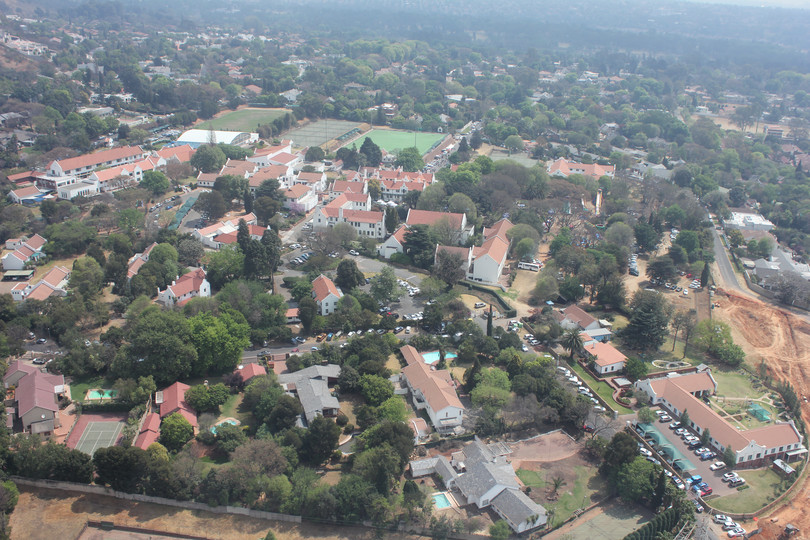
2014 Aerial view of St Andrew’s School for Girls taken by Mrs Jeanette Lloyd, senior school secretary at the time, during a Spring Expo helicopter flight
- 2010 South Africa hosts the 2010 FIFA World Cup
- 2010 Ms Annette dos Santos appointed to lead uBambiswano
- 2012 110th anniversary
- 2012 Aquatics Centre opened
- 2012 Mrs Karen Symons appointed as head of the Junior School
- 2013 Gill Blair Art Centre opened
Overview
Many people in the St Andrew’s community refer back to 2010 as a golden year in the school’s history. It was also a special year for South Africa, which hosted the 2010 FIFA World Cup, welcoming teams and football fans from around the world. This provided a festive backdrop for the school’s activities.
As a new decade dawned, there were changes in store. On the global front, the world was beginning to recover from the 2008 financial crisis and social media adoption was rising exponentially. Schools were grappling with adapting education to a more digitally focused world and school students were beginning to find their voices on powerful issues.
At St Andrew’s, it was a busy and exciting period, from celebrating the school’s 110th anniversary in 2012, to distilling its values, investing in its facilities, and prioritising its diversity and transformation journey.
During this time, St Andrew’s worked to balance tradition with adaptability and individualism with community, all while continuing to pursue excellence across every aspect of whole-girl education.
St Andrew’s goes soccer crazy

Preschool soccer fan, 2010
In 2010, almost everybody in South Africa suddenly became a soccer supporter. Football fever swept the country as preparations for the 2010 FIFA World Cup got underway. St Andrew’s was no different.

Grade 5 students celebrating the FIFA World Cup at the Johnson Road entrance to St Andrew’s in 2010
In her head girl’s report for the school magazine at the end of the year, Roxanne Pieterse wrote: “2010 really was a year of high expectations: for our country, for St Andrew’s, for the Matrics. The Soccer World Cup proved to be an incredible success and, in some ways, school is actually like a world cup. Our St Andrew’s soccer stadium is the Soccer City of schools: we have every facility necessary for a world-class education. The girls at the school are the loudest, most passionate and most enthusiastic fans… Then of course come the coaches: Mrs [Pauline] Jackson and our talented teachers who prepare us for every challenge we face, in and outside of the classroom.”

St Andrew’s Council, 2010
Back Row L–R: Nanette Heystek, Veronique van der Linde, Vanessa Rubombora, Chiara Baars, Shaista Kalidas, Nala Xaba, Kristin Nel
Middle Row: Mokgadi Kgosana, Mrs Pauline Jackson (executive head), Ms Sue Tasker (deputy head), Chikomborera Kamba
Front Row: Katya de Oliveira, Roxanne Pieterse (head girl), Claire Foley (deputy head girl), Kirsten Tregoning
Skilled for Life
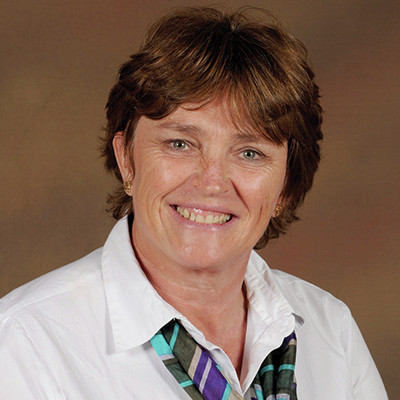
Mrs Cathy Fry, Junior School head, 2007 – 2011
In her final Speech Day report in 2011, Mrs Cathy Fry, Junior School head, said, “Good schools are not just about bricks and mortar or the latest and best facilities.” She noted that while St Andrew’s has wonderful amenities, they do not in themselves create a good school.
“A good school has a philosophy that all children can learn if they are taught, coupled with high expectations for children. The curriculum at St Andrew’s is a particularly broad one and something that changes and develops every year,” she said. She went on to speak about new creativity modules introduced for girls from Grades 4 to 7, as well as a moral education programme called Philosophy for Children, developed to teach children how to make good moral decisions, based on democratic principles.
“Educating children today is a huge responsibility,” she said. “To prepare children to take part in a world that we do not yet know, solving problems that we don’t know we have with technology that has not yet been invented is daunting. Literacy in the 21st century means more than basic reading, writing and computing skills. As writer Alvin Toffler points out, ‘The illiterate of the 21st century will not be those who cannot read and write, but those who cannot learn, unlearn and relearn.’”
This view reflects the St Andrew’s commitment to whole-girl education and the tagline “Skilled for Life”.
The Skilled for Life programme was first introduced in 2003 and during Mrs Jackson’s tenure as head became a core offering at St Andrew’s.

Mrs Gill Jeffrey, Senior School head since 2016
Mrs Gill Jeffrey, who joined St Andrew’s as a home economics teacher in 1997 and deputy head of student affairs from 2012, thoroughly enjoyed helping to implement the programme.
“The first level [of the Skilled for Life programme] is about responsibility for self,” she says. “Are you at class on time? Do you have your sports kit? Do you have your homework done? – that kind of thing. Level two is about how you relate to others. There is a requirement for a letter from a peer and things like community service. Level three is about responsibility over tasks, and level four is about responsibility over others.”
The school later moved from a punitive discipline system to a more restorative system. The old system of “house marks” and detention fell away and St Andrew’s instead focused on helping girls to understand what they could do to address wrongs done, such as mediation, working to rebuild trust or undertaking acts of service.

Mrs Bev van Niekerk, Junior School head from 2017
“I think that the idea of Skilled for Life captures our goal and what underpins everything we do. I love it because it’s so much broader than just academics. Skilled for Life is about you as a person and also tapping into soft skills and about giving you the resolve and the grit and the resilience to face whatever comes your way and to be able to network and encourage and make a difference. I love the fact that it’s not just targeted toward academics, but it speaks to a much broader space about character. I often say to parents, don’t ask your daughter what she wants to be one day; ask her who she wants to be.” Mrs Bev van Niekerk, Junior School head, 2017 – present
The whole-girl education model goes beyond equipping every girl to learn. As Mrs Petra Scherf Queiros, former head of the Preschool, notes, Mrs Jackson believed in celebrating every child. And, according to Mrs Ann Wright, this philosophy has been around at least since Mrs Bridget Walton’s era. “One of the things that I learned from Bridget Walton was: make sure that you have something for the girls who are not sporty and are not academic. And that just stayed with me, my entire life. Bring those children in, so they can also enjoy being at school.”
A new season for uBambiswano
In 2010, Ms Annette dos Santos joined St Andrew’s to lead uBambiswano as the school’s social development coordinator. She worked, along with Mrs Jackson and the management team, to encourage the St Andrew’s community to move beyond the idea of charity and towards social responsibility and community building.
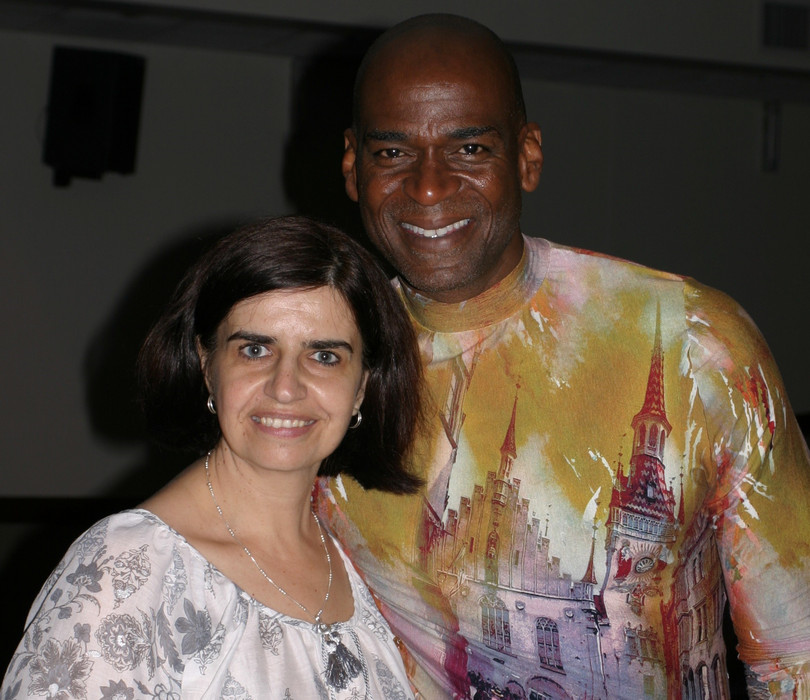
Ms Annette dos Santos with Prof. Khalil Osiris, guest speaker at the uBambiswano prizegiving in 2013
Ms dos Santos realised that uBambiswano lacked visibility in day-to-day school life and set about trying to change that. As the school was in the process of finalising its values, she tried to get people to think more deeply about what community meant for everyone in the St Andrew’s context, including the uBambiswano pupils. She started to host sessions with girls and parents to explain what uBambiswano was doing, attended school events to be a voice for uBambiswano and actively sought new fundraising avenues to support the organisation. She also created reports to be discussed at official board meetings.
She says that one simple but effective breakthrough was later when her office moved from its previously physically isolated location away from other management teams to the main Bedford Court building. uBambiswano was part of the 2014 establishment of the Andrean Advancement team, initially headed by Mrs Claire Pattle. This also incorporated the Old Girls’ Association, the admissions, public relations and marketing teams, the archives and the Heritage Foundation. “I felt like for the first time, I ‘belonged’ with the rest of St Andrew’s,” Ms dos Santos recalls.
Ms dos Santos says a major milestone she celebrated during her time was seeing the first uBambiswano student accepted into St Andrew’s on a scholarship as a full-time learner. She also started to help learners and their families with applications for scholarships at other schools. “I realised that there were lots of scholarships out there, but that the children didn’t have access to that information,” she says.
She began to collect the information to share with learners and then realised they also needed help with things like printing application forms, filling them in and submitting them. She developed a template and a process for applications and by the time she left, 40 uBambiswano students had secured scholarships.
Ms dos Santos also spearheaded the partnership with the Tomorrow Trust in 2011. This enabled the school to extend support to former uBambiswano learners who were now in Grades 10 to 12.
Celebrating 110 years
2012 was a special year for many reasons. St Andrew’s celebrated its 110th anniversary, including a Christmas in July fundraising function hosted by the St Andrew’s Heritage Foundation with log fires, turkey, gammon and glühwein. The girls and staff serenaded guests with Christmas carols and the Grade 9 girls were ‘Christmas Elf’ waiters. Dinner was followed by an auction, with more than R 30 000 being raised for the foundation’s endowment fund.

The Heritage Foundation’s ‘Christmas in July’ function in July 2012
In the same year, under the leadership of Mr Robert Pullen and supported by his sports department staff, the school opened the new Aquatics Centre. As well as being a beautiful architectural achievement, the new centre became a place where girls across the spectrum could grow in their swimming skills. The centre attracted some star swimmers to St Andrew’s, and through its learn-to-swim programme, all students could acquire this valuable life skill.
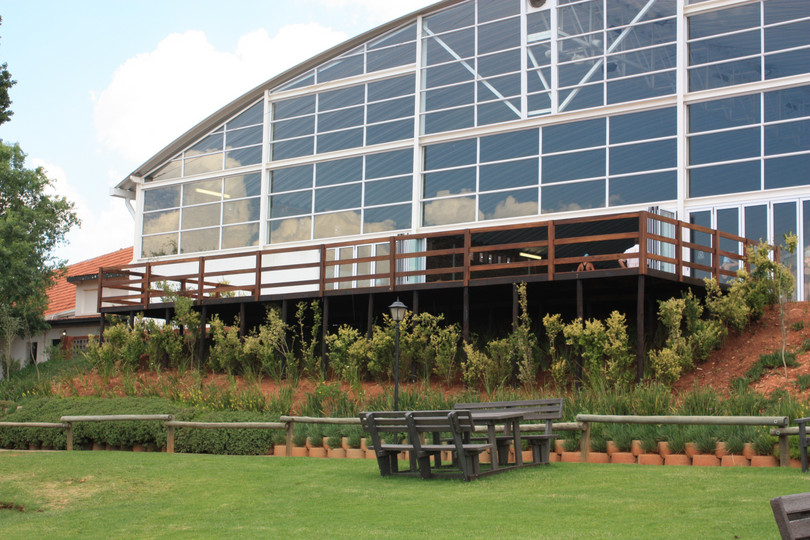
The Aquatics Centre was dedicated on Founders’ Day, 2012
The following year, in 2013, St Andrew’s won the Interhigh Premier Gala for the tenth consecutive year.
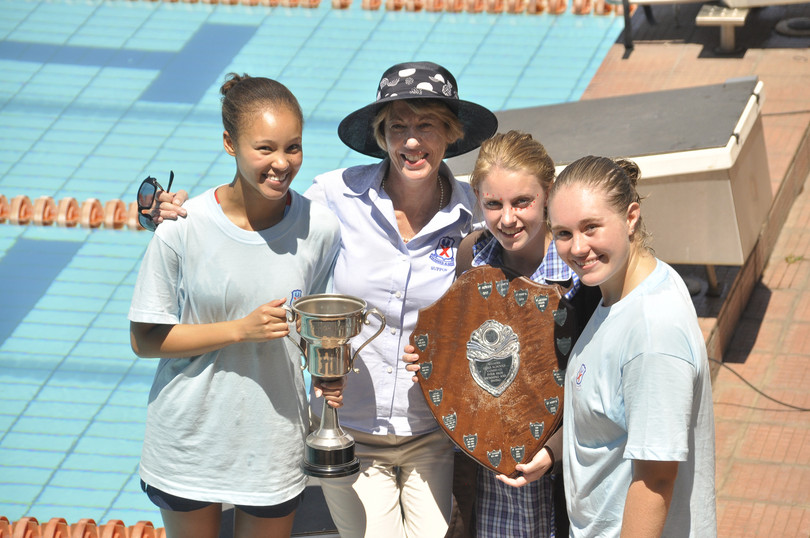
St Andrew’s wins the Interhigh Premier Gala for the tenth time in 2013
L–R: Tasha Francis (swimming vice-captain), Mrs Pauline Jackson (executive head), Catherine Dodge (diving captain), Danielle van Veijeren (swimming captain)
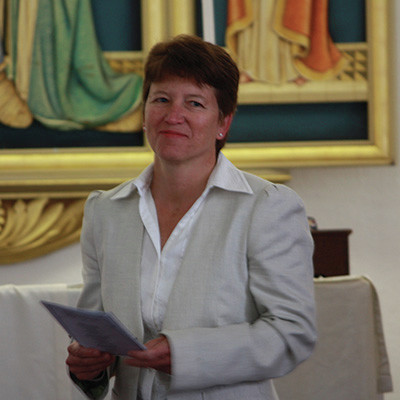
Mrs Karen Symons at her induction, May 2012
For the Junior School, 2012 was an exciting year too, as Mrs Karen Symons was appointed head, bringing a fresh approach, and a second storey that had been added to the 1960s classroom block was blessed.
At the Junior School Speech Day, Mrs Symons read out a letter she had imagined on behalf of Miss Jean Fletcher for the girls, on the occasion of the school’s 110th birthday. In it, she wrote, “All of the skills and characteristics that we treasured in 1902 are still important today. They are limitless; you can have as much of them as you need. Courage, perseverance, compassion, commitment, loyalty, fellowship, passion, creativity, curiosity and more are there for you and there is enough for everyone.”

Mr Stuart Thompson, chairman of the board, 2010 – 2015
Mr Stuart Thompson, who was the chairman of the board from 2010 to 2015 says that schools bring a vast mix of people, from staff to learners, management and parents together through a shared purpose; but it’s not always possible to predict how well those different groups will interact. At St Andrew’s during this period, however, he says the mix of people was “where the magic happened”. Everyone brought something valuable to the greater whole and helped the school to continue balancing “continuity and freshness”.
Unforgettable functions
Many people don’t realise what a large role functions play in the school community. St Andrew’s has a reputation for hosting incredible events, from Matric Dances to the famous netball tournaments, staff functions, Spring Expos and anniversary celebrations. Mr Chris Boshoff held the role of functions manager from 2003 to 2021 and in his 18 years at the school played a major role in developing this reputation.
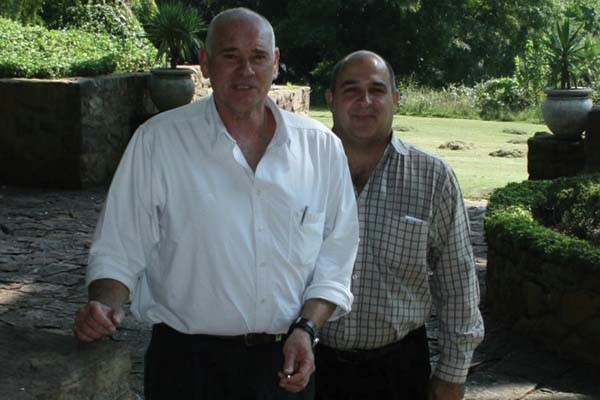
Mr Allan Groenewald (L), estate manager, and Mr Chris Boshoff, functions manager, who worked together to prepare for many school functions, 2009
He recalls that when he was appointed by Mrs Pauline Jackson, St Andrew’s had to hire all the equipment for every function. Mr Boshoff had a vision for events to be an additional marketing tool and assist with fundraising. He focused on offering weddings at the school for Old Girls and conferences for parents, and slowly built up the school’s eventing inventory.
He says one of his favourite parts of the job was interacting with the girls, who taught him all sorts of things, like what a minion is (a character from the movie Despicable Me) and how creative they could be. He also thoroughly enjoyed creating a book, The St Andrew’s Steaming Cauldron, with the help of Mrs Alison Orpen and Mrs Caterina Cannone.
“The purpose of the book was to give the [catering and functions] staff the opportunity to take these books home and say to their families, ‘This is what we do’. My aim was to be able to show the staff’s families what they are capable of,” he says.
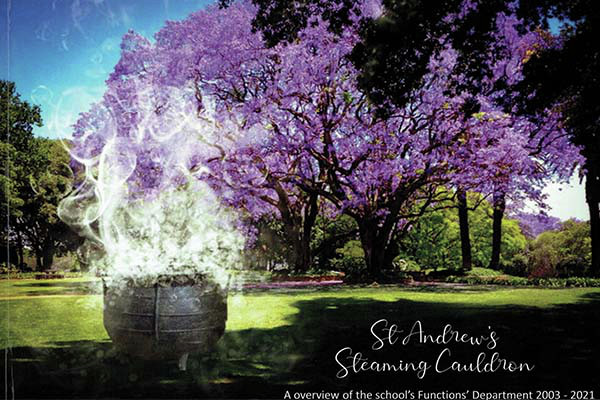
“St Andrew’s has been truly blessed with the most amazing [catering and functions] staff. Their dedication and their commitment are just incredible.”
Mr Boshoff says that as St Andrew’s grew its function capabilities, hosting a Debutantes’ Ball was identified as a fundraising opportunity and a way to get the girls involved. He enjoyed teaching the fathers and daughters how to waltz and watching them dance together – many for the first time.
Other highlights included sharing his passion for opera with the girls during life orientation lessons, as well as teaching them skills such as how to set a formal table. An Old Girl got in touch with Mr Boshoff after she had matriculated to say that she enjoyed this so much that she had taught her brothers how to do it and it became a monthly ritual to host a small dinner for their immediate family at home.
Another stand-out memory was the Heritage Ball in 2007 hosted by the Old Girls’ Association to celebrate the 105th anniversary of the school and the launch of the Heritage Foundation. “We had a huge tent on the tea lawns, with a band,” he says. “It was a very big event with lots of pomp and splendour. I was standing in the middle of the tent directing people to their seats. People were queuing up at the tent entrance when suddenly we heard the noise of the bagpipes starting up. A whirlwind followed them and was drenching all the guests standing outside the door. The bagpipers were all running in different directions. The tent poles on the one side of the tent just flew up. Guests were standing up trying to hold up the tent.”
“I saw that the mast pole was not going to do what it was supposed to do, so I tied the strap for the mast pole around my waist. And there I was standing in the rain while all the guests were standing on the veranda looking at me, and I was cursing the mast pole and saying, ‘You are not going anywhere tonight because we’ve already got 200 guests in the tent.’ A lot of people still laugh about that.”

Pipers at the 105th anniversary ball – before the storm!
Functions
Functions gallery Functions
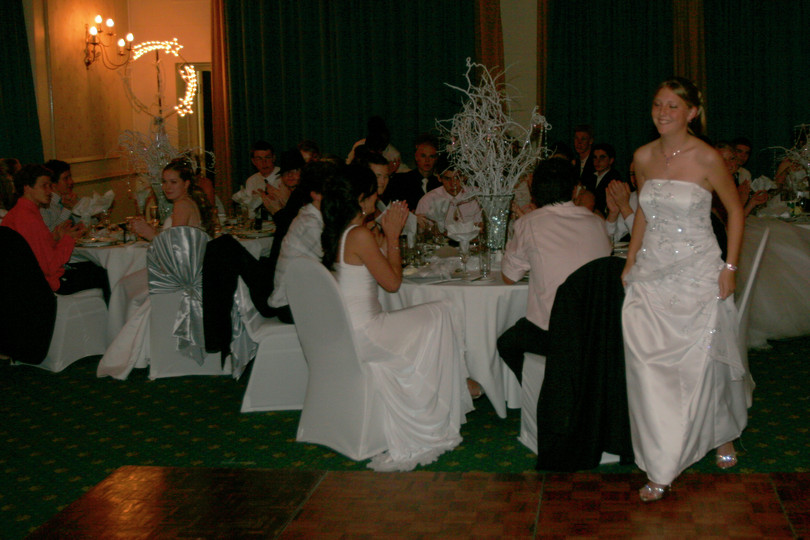
Functions gallery 1 Debutantes’ Ball at the Wanderers. These functions raised money for the school and uBambiswano

Functions gallery 2 Spring Expo
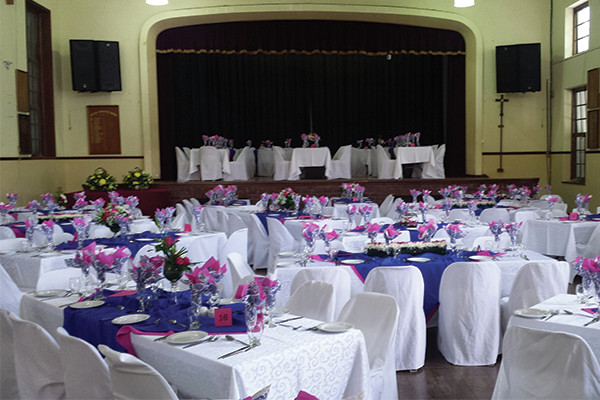
Functions gallery 3 Valedictory lunch

Functions gallery 4 Founders’ Day Celebration

Functions gallery 5 Immaculate décor
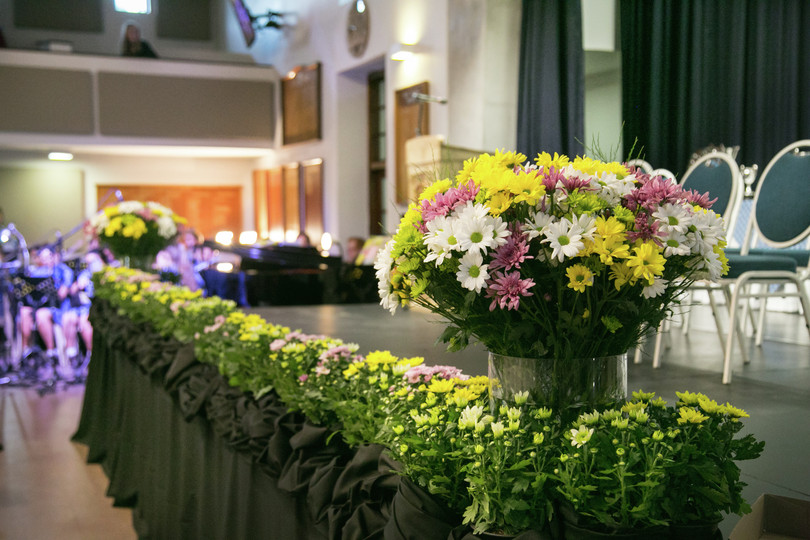
Functions gallery 6 Senior School Speech Night platform décor
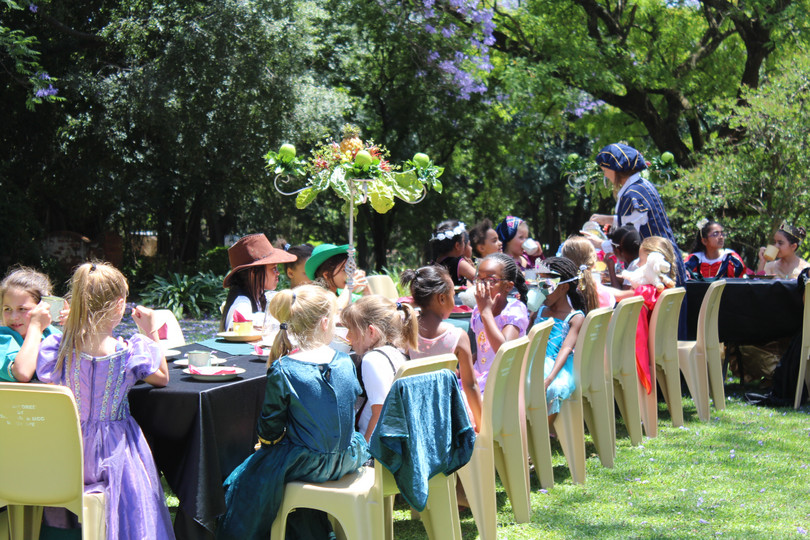
Functions gallery 7 Junior school medieval banquet
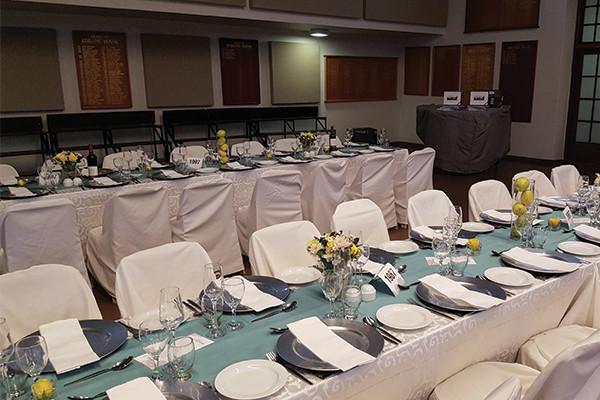
Functions gallery 8 Old Girls’ reunion lunch
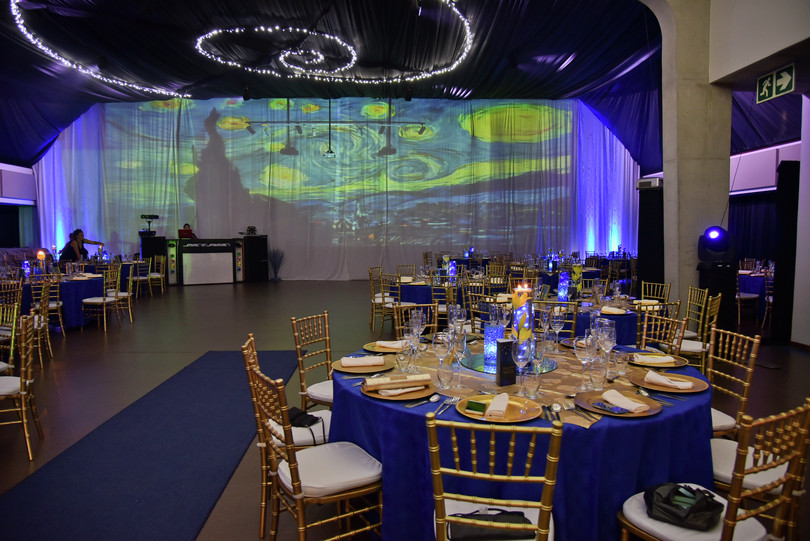
Functions gallery 9 Matric Dance

Functions gallery 10 Cakes for occasions
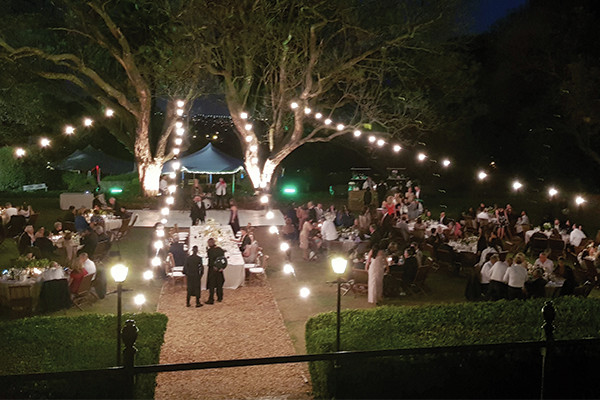
Functions gallery 11 Wedding of an Old Girl

Functions gallery 12 Staff Christmas lunch
Developing young talent

Ms TC Nkosi, (now Nkosi-Mnanzana), the first SAMST intern at St Andrew’s

Ms Tsholofelo Mhlanga, one of the first interns recruited by St Andrew’s
St Andrew’s first began accepting interns in about 2008 as part of a desire to help develop young, black teaching talent. Two of the first interns were Mrs TC Nkosi-Mnanzana (née Nkosi) and Ms Tsholofelo Mhlanga, who both began their teaching careers at St Andrew’s.
Ms Mhlanga was recruited by the school directly, while Mrs Nkosi-Mnanzana arrived through the South African Mathematics and Science Teacher Intern Programme established by the Independent Schools of South Africa. Today, Ms Mhlanga is a fully-qualified foundation phase teacher in the Junior School, while Mrs Nkosi-Mnanzana is the deputy head of St Stithians Girls’ College.
Although she is no longer at the school, Mrs Nkosi-Mnanzana has remained in touch and even had her wedding ceremony in the St Andrew’s chapel.
For both women, arriving at St Andrew’s was an adjustment. “I went to school in Eldorado Park and I had never experienced an independent school,” recalls Mrs Nkosi-Mnanzana. “I remember that Mr JD Mostert, a teacher in the sports department, volunteered me for all sorts of sports teams. One day, I was helping with the squash team and the weather changed, so I assumed their matches would be off because I did not know that squash was an indoor game,” she says, laughing.
She says she is grateful for the support she received beyond just the teaching curriculum from the St Andrew’s community. “Never did I feel that there was a sense of disbelief around the fact that I didn’t have a similar experience to someone else,” she says. “Those sports interactions made me realise that I’m more than my brains in an academic institution. I got to build relationships through experiences outside of the classroom. I got to go on camp. I actually lived out my high school years over as an intern. It was really exciting that the school was open to allowing me to experience those things, and supporting me in all of those things.”
Ms Mhlanga says that something she loves about the St Andrew’s schools is the sense of community. Although it took her some time to develop the confidence to bring her “full self” into the classroom, she says she values being connected with the St Andrew’s community, the shared love for one another, and how her girls cheer her on. She has faced significant health challenges over the past few years and remembers one instance where she was put on a new medication regime that made her foggy and she developed quite a bad stammer.
“I was reading a story in the library and I read a whole sentence without stammering and my Grade 1s applauded me,” she says. “Things like that – knowing that your children are there for you as much as you’re there for them.”
Mrs Nkosi-Mnanzana says that she’s grateful for the opportunity St Andrew’s gave her to explore her interests and passions. For example, she discovered she had an aptitude for technology and embraced the use of the school’s new interactive whiteboards. This led to her being offered a training opportunity, which in turn led to the chance to travel overseas – a first for her – for an international conference.
Ms Mhlanga says St Andrew’s continues to work to improve its intern programme and to adapt and remain relevant. “Our shared values define our space and allow us to enter the school respecting everybody’s individuality,” she says. “That’s something I’m loving. A lot of work is being done and I really applaud our school. Yes, things aren’t perfect. It’s not a rosy picture, but it’s definitely one that that is brightening as we grow… I really am so cognizant and grateful for the growth and change that we are continuing to achieve, while maintaining our identity, of course.”
The Gill Blair Art Centre
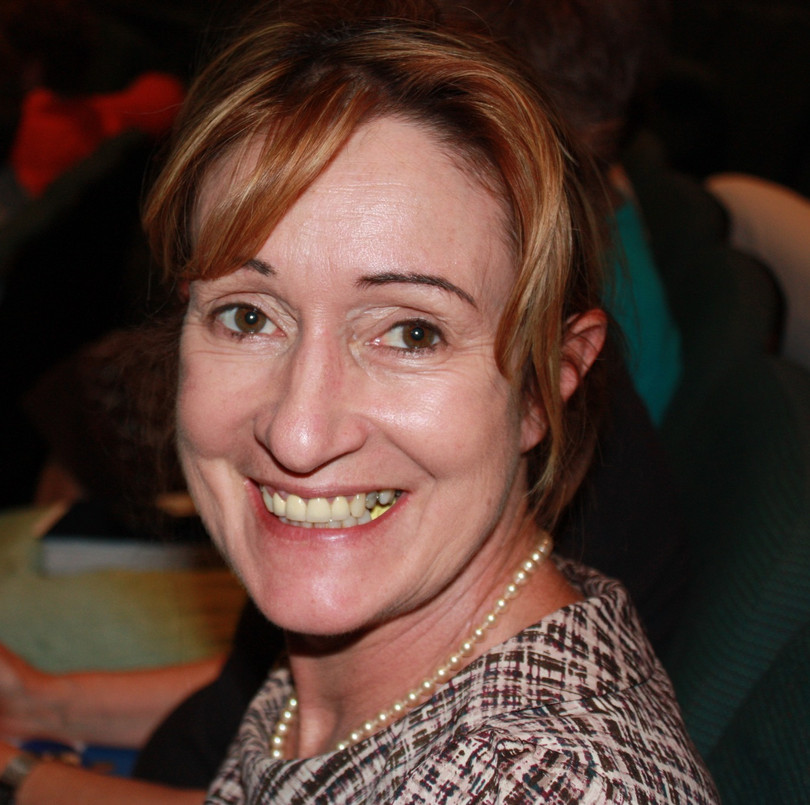
Beloved art teacher, Mrs Gill Blair
In 2013, The Art Centre was officially opened, in memory of art teacher and former student, Mrs Gill Blair (née dos Reis, Class of 1977), by her children, Greg, Natalie and Bryan. Matric artworks were displayed in the centre and the Allister Rogan Auditorium concourse, with artworks from other grades on display in Bedford Square. Music was provided by the Junior and Senior School orchestras, as well as the marimba band, and Mrs Blair was remembered as an inspiring and beloved art teacher.

Bryan, Natalie and Greg Blair at the opening of the Gill Blair Art Centre in 2013
Sad goodbyes

Mrs Dorothy Ede speaking at the opening of the new boarding house, 2009
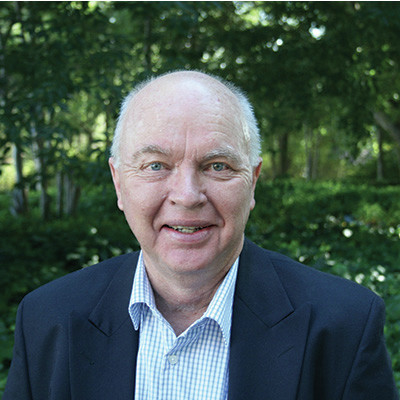
Mr Frank Simmonds, headmaster of St Andrew’s from 1973 to 1994 and later a board and trust member
Along with all the happy memories between 2010 and 2014, there were also some sad ones. Mr Frank Simmonds and Mrs Dorothy Ede passed away in 2012 – both important figures in the school’s history.
Mrs Ede served on the St Andrew’s staff for 33 years, for 22 years as deputy head to Mr Simmonds. During a tribute to her in the school chapel, Mr Simmonds spoke of her commitment to people, which he said was at the heart of her work.
Mr Simmonds was head from 1973 to 1994. When he died, Mrs Wright was asked to arrange the memorial service at the school. “There were so many people, we had to hold it on the Tea Lawns,” she recalls. “There were 1 000 people and we had flowers, we had music, we had his favourite song. It was an immense occasion, because he was a highly respected man.” In honour of Mr Simmonds’ penchant for wearing a hat, guests were invited to wear their favourite hats.
The year 2013 also marked a farewell of a different sort, as Mrs Jackson ended her tenure as executive head. After more than a decade at the school, she felt her season was over and that it was time to hand over to a new leader.
She left the school in a stable, healthy financial position, having achieved significant growth, progress and success for St Andrew’s during her time. Over the years Mrs Jackson has remained a friend to the school and is warmly remembered for her role in the legacy of St Andrew’s School for Girls.
“I think one of the greatest highs for me was the girls,” she says, reflecting on her St Andrew’s journey. “I think young women are very wise; they think laterally, all the time. They would come out with extraordinary things, and I would think, ‘Wow. This is wisdom that they want to tell you about.’”

2013 Mr Allister Rogan and Mrs Pauline Jackson at a farewell event for Mrs Jackson